16 posts tagged with "AI"

View All Tags

· 4 min read

People do not dislike AI at law firms. They dislike bad systems.

There is a persistent belief in legal intake that callers will reject AI the moment they realize they are not speaking to a person. In practice, that is rarely what drives frustration. Most callers are not evaluating your staffing model or forming an opinion about your technology stack. They are trying to answer a much simpler question: am I being heard, and is this actually moving forward?

When the experience answers that question clearly and confidently, people are generally comfortable. When it does not, frustration follows, regardless of whether the interaction is handled by a person, a script, or a machine. The emotional response is tied less to the presence of AI and more to whether the process feels effective and responsive.

The comparison that breaks decision making​

Many firms approach this decision as a comparison between human intake and AI intake, but that framing is often misleading. Human reception and intake teams tend to be evaluated at their best: attentive, fully trained, fully staffed, never rushed, and consistently available at the right moment. AI, on the other hand, is typically judged at its worst: generic, rigid, incapable of nuance, and disconnected from real workflows.

This uneven comparison makes rational decision making difficult because neither side is being evaluated under real operating conditions. A more useful lens is system versus system. What actually happens on a Tuesday at 11:20 a.m. when the phones are ringing, the team is stretched, and a caller reaches out in a high stress moment? That is the environment that determines outcomes, not idealized scenarios on either side.

What callers actually care about​

Inbound legal calls are not seeking perfection as much as they are seeking clarity. Callers want to explain their situation once, feel confident that it was understood, and leave the interaction with a next step they can trust. When those elements are present, the experience feels professional and reassuring.

Where intake starts to fail​

Breakdowns tend to occur when the process introduces friction, such as long hold times, repeated questions, loss of context between handoffs, or unclear follow up. Even a friendly human interaction can feel ineffective if those issues persist. Conversely, when a system listens carefully, captures context accurately, routes information intelligently, and closes the loop quickly, callers tend to experience that as helpful and competent, regardless of whether AI was involved in the process.

The challenge is that most of these breakdowns are not obvious from the inside. From the firm's perspective, the process can feel functional, even when it is creating friction for callers.

The part most firms cannot see​

A significant challenge for many firms is the lack of clear visibility into their current intake performance. Key questions often go unanswered: how many calls are missed, how quickly callbacks occur, which types of calls consume the most time, and where potential clients drop out of the process. It is also common to lack insight into whether callers are repeating themselves across multiple touchpoints or how often conversations end without a clear next action.

Without this level of visibility, it becomes easy to assume the current process is mostly effective and to evaluate new systems against an idealized version of existing operations. In reality, improvement requires a grounded understanding of actual performance. Both AI driven and human workflows need to be assessed against measurable outcomes rather than assumptions.

What we are really building​

At Reflekt Legal, the focus is not on replacing care with automation, but on building stronger systems for legal teams. That means designing workflows that capture intent accurately, preserve context throughout the interaction, and make follow through measurable. It also means giving firms operational visibility into call volume, call types, response quality, and ultimate outcomes.

Well designed systems reduce the likelihood of missed opportunities while allowing attorneys and staff to concentrate on the work that truly requires their expertise. The objective is not to mimic human conversation for its own sake, but to ensure that every caller feels heard and understands that their issue is being handled with urgency and clarity.

When that standard is met, the presence of AI becomes largely irrelevant to the caller. What matters is that the firm responded effectively and moved the situation forward.

· 4 min read

The update calls that quietly shape the day​

When people think about inbound calls at law firms, the focus usually lands on new leads. But many firms also handle a steady stream of calls from existing clients who just want to know where things stand. From what we have seen across firms, on average more than half of monthly inbound calls fall into this category. Not all of them are routine, but it gives a clear sense of the scale.

Who is actually calling your firm: pie chart of existing clients, new clients, and non-clients

These are not complicated conversations. They are quick check-ins, often driven by a need for reassurance or clarity, yet they tend to land right in the middle of everything else your team is trying to do.

In a typical flow, a receptionist answers, gathers details, and then tries to connect the caller with someone who has matter context. If that person is in a meeting, in court, or already on another call, the client waits or the team adds another callback to the list. Nothing about this is fundamentally broken, but it quietly pulls your team away from the work that actually moves cases forward.

Over time, that tradeoff becomes harder to ignore. Time spent tracking down updates is time not spent preparing filings, thinking through strategy, or helping a client through something that actually requires legal expertise. The cost is that it can slow down the very progress the client is calling to ask about in the first place.

As we worked through these workflows with firms, the question was not just whether AI could answer status questions. It was whether it could give your team that time back in a meaningful way.

That is what led to Case Updates. The goal is straightforward: let the AI handle routine status calls from start to finish so your team does not have to step away from meaningful work to relay information that already exists in your systems. Instead of pausing a call while someone searches for records, the AI verifies the caller, pulls the right context from the CRM or CMS, and answers the question immediately.

This is not about reducing touch points with a client. Instead, it is about recognizing that your team creates the most value when they are helping clients make progress and not when they are repeating information that is already available.

How it works in practice​

When an existing client calls, the AI confirms identity using the firm's process and available records. Once it matches the caller to the correct matter, it retrieves the latest case context in real time.

If the request is a routine update, the AI handles it on the spot, removing the need for holds, transfers, or interruptions to your team's workflow. Instead of pulling someone out of their current task to check a system and relay information, the update is delivered immediately and accurately within the same conversation.

The result is fewer context switches and fewer small interruptions that break up deep, focused work. And when something does require human input, the call still routes to the right person, but now it comes with context so your team can focus on solving the problem rather than reconstructing it.

What this unlocks for firms​

Clients still get answers quickly, but your team is no longer the bottleneck for routine information. They remain engaged in the work that actually requires judgment, experience, and sustained attention.

That shift changes the rhythm of the day. There are fewer interruptions, less time spent on repetitive tasks, and more time available for the kind of work that moves cases forward. It also changes how clients experience your firm. They continue to feel informed, but when they do speak with your team, the conversation centers on progress, decisions, and next steps rather than basic status updates.

Case Updates is not about removing conversations. It is about ensuring your team is fully present for the ones that matter most.

Handle routine case updates without interrupting legal work

See Case Updates and your AI client communication workflow in a live walkthrough.

See it in Action

· 4 min read

How to scale law firm intake without missed calls or lost leads​

Every growing firm eventually hits the same uncomfortable tradeoff. On one side is the way many attorneys want to practice: answering calls personally, listening long enough to understand the situation, and carrying context from conversation to conversation so clients feel known rather than processed. On the other side is volume. More marketing, more referrals, and more matters mean more inbound demand, and there are only so many hours in a day.

No one can be in two places at once. A lawyer in court cannot pick up the phone. A lawyer deep in drafting cannot always break away for a fifth scheduling call. And yet the person on the other end of the line is often calling at a moment that already feels urgent to them. The tension is not philosophical. It is operational. It shows up as voicemail, callbacks that slip, and leads that cool off while the firm is doing good work elsewhere.

Scaling a law firm is not only a question of hiring more attorneys. It is a question of how the firm captures, qualifies, and routes demand before it ever becomes a retained matter. If intake does not grow with visibility and reputation, growth creates frustration on both sides. The firm feels like it is leaving opportunity on the table, and callers feel like they are being asked to wait during the exact window when they most want a response.

Some teams respond by pushing intake to whoever is available. That can work for a while, but it often pulls paralegals and assistants into repetitive triage instead of higher leverage work, and it still breaks down when volume spikes. Other firms hire dedicated intake staff, which can be the right answer at scale, but it introduces training, coverage, and consistency challenges of its own.

What firms are really trying to preserve is not that every single conversation must be with a partner. It is that the experience still feels attentive, coherent, and respectful of the moment the client is in. Personability is not the same thing as every call being answered by the same person. It is that the firm does not go quiet when someone reaches out.

What law firm missed calls and slow follow-up actually cost​

The worst outcome in this equation is not that a firm chooses to delegate or systematize parts of intake. The worst outcome is silence. A missed call at the wrong time is not a minor administrative slip. For the caller, it can land as abandonment at a stressful point in their life. For the firm, it is a case that never starts, a relationship that never forms, and a reminder that demand and attention are permanently out of sync.

That is the problem we think about at Reflekt Legal. We are not trying to replace judgment, advocacy, or the conversations that define a lawyer’s relationship with a client. We build AI employees that handle administrative load and routine dialogue: the structured questions, the follow-ups, the scheduling threads, and the continuity that keeps matters from stalling because nobody had time to send the next message.

The goal is to widen the firm’s intake capability without asking attorneys to shrink their ambition for how clients should be treated. When predictable work is handled consistently in the background, lawyers and staff are freed to spend their limited time on the exchanges that actually require expertise, empathy, and strategic thinking.

Keeping a personal client experience as the firm grows​

Scaling a personal client experience sounds like a contradiction until you separate the parts of client communication that benefit from a lawyer’s presence from the parts that mostly need reliability, speed, and a clear next step. Clients still deserve a human when the situation calls for it. They also deserve a firm that answers, remembers what was said, and does not lose the thread between channels.

That is how we think about building systems for legal teams: expand what the firm can respond to, reduce what falls through the cracks, and protect attorney time for the work only a lawyer should do. Growth does not have to mean choosing between being personal and being available. It has to mean being both, on purpose.

Keep the conversation going

Learn more about what we are doing at Reflekt Legal.

Meet with us

· 4 min read

Reflekt Legal started with a simple realization about how much of our time was being pulled away from the work we were actually good at. It came from a frustration we experienced firsthand as founders. We found ourselves spending a disproportionate amount of time on repetitive follow-up calls and conversation tracking, when our goal was to be solving problems and building for the people we serve.

After spending time in the legal world, we learned that this tension was not unique to us. Across conversations with attorneys and legal teams, the same pattern continued to surface. They were not looking for another piece of software to manage. They were looking for a way to reduce attention to administrative work that surrounds legal practice. They wanted less time managing the constant flow of intake, follow-ups, and routine updates and more time advising clients, applying judgment, and advocating effectively: helping them.

What we heard from firms at SXSW​

That message became especially clear at our event hosted during SXSW week. Across conversations during the event, one theme kept resurfacing: lawyers want to build relationships; lawyers want to help their clients. They want to apply judgment, advocate effectively, and solve clients' problems. The gap between what attorneys are trained to do and what their day often demands remains wider than it should be, and it is often defined by the operational responsibilities required to keep a practice moving, from capturing new matters to maintaining ongoing client communication and ensuring nothing falls out of sync.

In practice, this shows up in ways that are both familiar and consequential. Follow-ups do not always happen because attention is elsewhere, missed calls turn into missed cases, and leads that come in through ads or webforms often sit without a timely response. Scheduling stretches into back-and-forth exchanges, conversations require manual tracking across channels, and routine client updates or internal handoffs depend on coordination that is easy to delay. Each of these moments is small in isolation, but together they shape how a firm grows, how consistently it operates, and how clients experience the firm over time.

What we are building and why​

This is exactly where our product focus comes from. We are not trying to automate the practice of law or replace legal reasoning. We are focused on building systems that remove avoidable friction around legal teams, so attorneys can remain focused building relationships with and helping their clients. In practice, that has led us to build AI intake employees designed to handle conversations across calls, webforms, emails, and inbound leads in a way that is structured, consistent, and aligned with how firms already operate, while also supporting the broader communication layer that extends beyond initial intake.

That system exists to make sure conversations do not stall or get lost. It maintains continuity, carries context forward, and reduces the need for constant manual coordination. Instead of adding another tool to manage, it becomes part of the operational layer that quietly supports how firms engage with both prospective and existing clients.

Central to this approach is the belief that much of the work surrounding legal practice is conversational and process-driven, even when it sits outside of pure legal reasoning. Building an AI system that can manage those conversations with the nuance and continuity of a human allows us to support legal teams without pulling them further into operational overhead. It allows us to take responsibility for the surrounding processes that keep a firm running, while attorneys stay focused on the legal work itself.

Our mission​

"Let Lawyers Be Lawyers" is the clearest way we can describe that direction. It reflects the reason we started building in the first place, the feedback we continue to hear from firms, and the standard we hold ourselves to as we expand the platform. We have experienced what it feels like when operational work pulls problem-solvers away from the areas where they are most effective, and we have seen how consistent systems can reshape how that work gets done. Our focus is to continue building in a way that narrows that gap, so that the time and attention of legal teams are aligned with the work that defines their value, while the processes around them are handled with the same level of consistency and care.

· 5 min read

We brought together around 100 lawyers, operators, founders, and investors in Austin during SXSW for a focused conversation on AI in legal. It was a discussion about how artificial intelligence is actually being implemented inside law firms today. The goal was simple: share practical insights and perspectives from different parts of the legal tech community about how legal AI is already changing how law firms operate.

Austin is quickly emerging as a hub for legal tech, and this event was designed to contribute to that momentum. By bringing together practitioners, operators, builders, and investors, the conversation reflected multiple perspectives on the same shift. The most valuable insights came from where those perspectives overlapped and, at times, disagreed. That tension is where real progress tends to happen in emerging markets like legal AI.

Scaling Law Firms Without Losing the Human Element​

The first panel focused on a core operational challenge facing modern law firms: how to scale without losing the personal client experience that defines legal work. Unlike many industries, legal services are often delivered during high stress, high stakes moments. Clients expect and should receive direct access to their lawyer during these urgent and emotionally charged times in their lives.

At the same time, the reality inside most firms is constrained by time. Lawyers are in court, managing caseloads, and balancing competing priorities. Missed calls and delayed responses are common, and they often occur at the worst possible moments for clients.

This is where AI for law firms is beginning to show measurable value. Rather than replacing lawyers, the most effective implementations focus on handling repetitive, routine workflows across the firm. This includes tasks like client intake, document drafting, case status updates, legal research, billing, scheduling, and internal coordination. By automating these workflows, firms can improve their responsiveness and create consistency across cases without sacrificing the quality of human interaction. The outcome is more time for lawyers to focus on building stronger client relationships.

The second panel shifted toward the legal tech market itself, with founders and investors discussing what is actually working. The conversation moved quickly beyond experimentation and into adoption patterns across firms.

A clear trend emerged: law firms are moving away from isolated point tools and toward end to end workflow solutions. Instead of stitching together multiple products that each solve a narrow problem, firms are prioritizing platforms that can manage entire processes from intake through resolution.

This shift has important implications for companies building legal tech. Owning a full workflow increases both value and defensibility. It also raises a broader strategic question: when a platform becomes deeply embedded in how a firm operates, does it remain a vendor, or does it begin to function as infrastructure?

That question is still evolving, but it is already shaping how the next generation of legal AI companies are designed and positioned in the market.

Panel two photo

Several themes were consistent across both panels and conversations throughout the event. AI adoption in legal is no longer theoretical; it is actively being deployed at the workflow level. The firms seeing the strongest results are using AI to support human interaction rather than replace it. At the same time, the market is consolidating toward platforms that own meaningful portions of the client journey, rather than tools that operate in isolation.

There is also increasing alignment between lawyers, operators, founders, and investors on where the industry is heading. The conversation is shifting from whether AI should be used, to how it should be implemented effectively.

This event marked an important step in our broader effort to help establish Austin as a leading legal tech hub. The city has a strong combination of talent, capital, and a growing base of operators. Our approach is to continue creating environments where these groups can come together, exchange ideas, and push the conversation forward. Events like this are one part of that effort, but the longer term goal is to support sustained communication across the ecosystem.

What Comes Next​

We are continuing to work with law firms that are moving from experimentation with AI tools to full implementation of automated workflows. For firms evaluating how AI fits into their operations, the focus is no longer on isolated tools but on building systems that improve responsiveness, efficiency, and client experience at scale.

If you are exploring how to implement AI in your law firm, or evaluating legal workflow automation, we are actively working with teams navigating that transition. More events and conversations are coming soon.

Keep the conversation going

Learn more about what we are doing at Reflekt Legal.

Meet with us

Thank You​

Thank you to everyone who joined us and contributed to a thoughtful, practical discussion on the future of legal AI.

Thanks to our sponsors: Slingshot Law, Deep Invent, Aparti, FVF Law, Preminger Law, Quake Capital, ClaimExchange, Fractal Group, Robotax, Backdocket

· 5 min read

One of the most rewarding parts about building AI employees for law firms is discovering the "in-between" work that happens after the big moments. Everyone thinks about intake, signing, and case milestones, but once a personal injury client is onboarded and treatment begins, a second job kicks off in the background: helping treatment stay on track and making sure it's documented well enough to support the case.

Why treatment history moves settlement value​

If you've been around personal injury long enough, you already know this, but it's worth saying plainly. Settlement value isn't just about the crash or the initial diagnosis; it's about the story the attorney can build and defend, and the treatment record is a huge part of that story. Consistent care, a clear timeline, and documented progress give attorneys leverage, while gaps and missing updates are exactly the kind of things insurance adjusters use to argue the injury "wasn't that bad" or "must not have been related."

Why firms lose the thread​

Most firms don't let treatment tracking slip because they don't care. It slips because everyone is overloaded. Case managers and attorneys are already juggling nonstop work, and treatment follow-up becomes a repeating checklist that never really ends: reminders, reschedules, attendance checks, "how did it go?" updates, and then the extra step of putting everything somewhere organized. Multiply that across dozens or hundreds of active clients and it's easy to see how it turns into an "if we get to it" task.

The tough part is that treatment doesn't wait for a firm's bandwidth to open up, so when follow-up slows down the case doesn't pause with it. A client misses a physical therapy session and doesn't mention it, a chiropractor schedule starts getting spotty, or someone quietly stops going because life gets busy or they convince themselves they're "fine now." Even when clients are still showing up, updates often live in scattered texts or quick conversations and never make it into the CRM in a usable way. Later, when the firm needs a clean, defensible treatment narrative to support settlement value, the timeline can feel incomplete.

Building Treatment Tracking​

When we saw this pattern across firm after firm, it felt like the kind of problem that shouldn't be "normal" anymore. Not because it's trivial, but because it's repetitive, time-sensitive, and mostly communication driven, which is exactly where an AI employee can shine. So we built Treatment Tracking for our intake AI employees at Reflekt Legal, and we're excited about it because it's one of those features that makes people pause and say, "Wait... we can automate that?"

The idea is straightforward: if an AI employee is already communicating with clients and can hold a natural conversation, it can also handle the follow-up that firms rarely have time to do consistently. It doesn't forget, it doesn't get pulled into a fire drill, and it doesn't treat follow-up like a nice-to-have. It just runs the process, reliably, for every client.

How it works​

Treatment Tracking starts with appointment reminders. When a client has an upcoming treatment appointment, whether it's physical therapy, a doctor visit, or a chiropractor session, the AI reaches out ahead of time to remind them and reduce no-shows. Because it's automated, the firm isn't spending staff time on high-volume reminder work, and clients still get the nudge they often need.

After the appointment window passes, the AI follows up to confirm whether the client attended and how it went. Clients respond the way they naturally would in a text conversation, and those responses capture the details firms wish they had later: whether the session happened, how the client felt, what the provider said, and whether there were any new recommendations or next steps.

Then the system does the part that usually breaks down in real life: it logs everything. Each response is recorded directly in the CRM, building a treatment timeline without anyone needing to copy, paste, summarize, or remember to update notes. Over time, that becomes a structured record the firm can pull up instantly, instead of trying to reconstruct treatment history from scattered messages and memory.

Learn more

What this unlocks for firms​

What we love about this is that it doesn't just reduce admin work; it changes what firms can realistically stay on top of day to day. Instead of guessing how treatment is going across a caseload, teams can see a current picture of attendance, continuity, and progress. It also shifts problems earlier, so firms don't find out about missed appointments weeks after the fact or scramble to rebuild a timeline when negotiations are already underway.

At the end of the day, personal injury is documentation-heavy, and case value is tied to the strength of the record the firm can defend. Treatment Tracking is our way of making sure that record gets built continuously, with details captured while they're fresh and organized where the team already works. It's one of those "why wasn't this always automated?" features, and we think it's going to make a meaningful difference for firms that want to maximize outcomes for their clients without adding another ongoing task to an already overloaded team.

Keep treatment documented and tied to the matter

See Treatment Tracking and client follow-up in a live walkthrough.

See it in Action

· 5 min read

Strong network, fragile process​

One firm walked us through their referral partners and it was honestly impressive. They had trusted firms for family law, immigration, criminal defense, employment, and a handful of niche areas that only come up when you have been in the community for a long time. It was the kind of network you build over years: relationships you can rely on, people you know will take care of someone you cannot.

Then we asked a simple question: once you decide it is not a fit, how does the referral actually happen? The answer was always some version of "we send an intro," but when we watched the workflow, that intro depended on a person remembering the next step, picking the right partner, drafting the email, and hitting send in the middle of a busy day. The network was solid, but the handoff was fragile, which meant referrals could be delayed, inconsistent, or missed entirely even when the firm's intentions were good.

Why referrals matter, and why the handoff breaks down​

When someone reaches out to a law firm, they are rarely doing it casually. They are trying to solve a problem and they want direction quickly, even if the answer is "we are not the right firm for this." A thoughtful referral can turn that moment into a positive experience, because instead of a dead end the person gets a clear next step and a warm connection to someone who can actually help. And for firms, referrals are not just a nice gesture either: they strengthen partner relationships, reinforce a reputation for being responsive, and in many cases represent a real revenue stream.

The issue is that most firms already have the hardest part solved, which is knowing exactly who they trust, but the handoff itself still relies on manual execution after the conversation ends. Writing a good intro takes a little focus, so it lands in someone's inbox, gets pushed to later when the phone keeps ringing, and becomes inconsistent depending on who took the call and how hectic the day is. In the meantime, the inquirer is waiting and the partner firm never gets looped in while the person is still engaged, which is the exact gap we wanted to eliminate with Smart Referrals.

Once we saw this pattern across firms, it clicked for us that referrals were the perfect job for an AI employee. If the AI employee is already having the conversation, already determining that the matter is not a fit, and already collecting the right basics, then the referral should be a continuation of the interaction.

That is why we built Smart Referrals. The goal is simple: when a call or conversation ends with "we cannot take this, but we know who can," the AI employee should be able to initiate the referral immediately, using the firm's existing referral list and the same kind of introduction a great staff member would send.

How it works in practice​

Smart Referrals triggers right after the intake interaction ends. If the matter is outside the firm's practice area or otherwise not a fit, the AI routes the referral to the right partner based on the firm's preferences, whether that is practice area, jurisdiction, case type, or any other routing rules the firm uses.

From there, the AI handles the introduction. It drafts and sends the referral message to the partner firm and includes the inquirer or shares the necessary contact details so both sides can connect without friction. The message includes basic context from the conversation so the partner firm understands what the person needs and can pick up the thread without forcing the inquirer to repeat themselves from scratch.

Learn more

What this unlocks for firms​

Smart Referrals turns referrals into something firms can rely on operationally. Partner relationships get reinforced through consistent, professional intros, and the firm captures more value from inquiries that would otherwise end as a polite decline. Over time, that can make referrals feel less like an occasional favor and more like a dependable system.

It also improves the inquirer experience in a way that is easy to underestimate. Being referred out can feel like rejection when it is slow or vague, but it feels like help when it is immediate and specific. Instead of waiting for a manual follow up, the person gets routed to the right firm while they are still motivated to act, which makes the handoff smoother for everyone.

At the end of the day, the referral network has always been there. Smart Referrals is about making the handoff as strong as the relationships behind it, so firms can help more people, support partner firms, and turn "not our case" into an outcome that still creates value.

Turn warm referrals into immediate, consistent handoffs

See Smart Referrals and your AI intake workflow in a live walkthrough.

See it in Action

· 4 min read

The calls nobody was counting​

One of the surprises we ran into while working with growing law firms was how much of their phone traffic had nothing to do with new leads. A firm would tell us they were getting slammed, and everyone assumed that meant more intake calls. Then we looked closer and found a huge share of calls coming from insurance adjusters, medical providers, and treatment offices calling in with updates, requests, and quick questions tied to existing cases.

What really stood out was that the firm did not fully realize how many of these calls they were getting, or how much time they were spending just trying to figure out who the caller was, which case they were talking about, and where the call should go. By the time someone located the right client, found the claim details, and transferred the caller, the quick update had already turned into a huge time sink.

When this traffic is mixed in with everything else, teams tend to treat it as background noise. But once you quantify it, you start seeing patterns: how much vendor and adjuster traffic the firm gets, which cases generate the most inbound activity, and where bottlenecks show up inside the firm. That insight is hard to get when callers are bounced around and notes live in someone’s head.

Once we saw how common this was, our solution, Smart Routing, felt like an obvious fit for AI employees. Caller identification, intent detection, case lookup, and routing are all things that can happen in the background while a conversation is still unfolding. And if the AI can surface the right case context instantly, it can either route the call to the right person immediately or, in many situations, resolve the update without needing to interrupt anyone at all.

That is what Smart Routing is designed to do. It dynamically routes and handles calls in real time, not just based on a static phone tree, but based on who is calling, what they are calling about, and what the firm’s rules say should happen next.

How it works in practice​

Smart Routing listens for intent signals and identifies the caller type, whether that is an existing client, a vendor, a medical provider, a new lead, or an insurance adjuster. Mid conversation, it can search the firm’s CRM or CMS in seconds, pull up the relevant client record, and surface key details like case or claim identifiers, recent contact history, and any notes that matter for the handoff.

From there, Smart Routing can take two paths. If the right outcome is a transfer, it routes the call to the correct person or department immediately. The person receiving the call also gets a short whisper message with context, so they know who is calling, which client it relates to, and what the caller is trying to accomplish before they even say hello.

If the right outcome is to capture an update, the AI can handle that directly. For example, if a provider is calling to share a treatment update or confirm something simple, the AI can record the details and log them into the CMS under the correct client record. That means the information lands where it should, tied to the right case, without someone having to pause their work to track it down.

Learn more

What this unlocks for firms​

The most immediate benefit is speed and accuracy. Calls get to the right person faster, and when they do, the recipient has context instead of starting cold. That makes the firm easier to work with for adjusters and providers, and it reduces the internal back and forth that happens when callers are transferred multiple times.

The second benefit is clarity. Once Smart Routing is in place, firms start seeing what their inbound traffic actually looks like: how many adjuster calls are coming in, how many provider updates, what kinds of requests are most common, and where the team is spending time just moving information around. That visibility helps firms tighten processes, set expectations, and decide what should be handled by a person versus what can be captured automatically.

At the end of the day, Smart Routing is about removing friction from the calls that keep cases moving. It keeps routine updates from derailing your staff, it gets callers to the right place faster, and it turns please hold while I find that into a workflow that happens automatically in the background.

Route vendor and adjuster calls with the right case context

See Smart Routing and your CRM working together in a demo.

See it in Action

· 4 min read

The notification maze inside most firms​

One of the firms we worked with had a very organized system for internal updates. Every department had its own email address: billing, existing clients, new inquiries, case management, and a few others that had evolved over time. When something important happened on a case, the right people were supposed to be looped in through one of these channels so everyone who needed to be updated was.

The system worked, but only when someone remembered to use it. A case status would change, and someone on the team would need to think through who should know, which inbox to include, and whether the update belonged in email, Teams, Slack, or somewhere else. None of this was complicated, but it relied heavily on memory and habit.

Every firm has its own way of doing this​

What made this interesting is that every firm handled these updates a little differently. Some preferred email threads. Others relied on Slack channels or Teams notifications. A few used text messages for urgent updates. And almost every firm had its own unwritten rules about when certain people should be notified and when something could wait.

We quickly realized this was not a problem firms wanted to standardize. These processes evolved over years, and teams were comfortable with them. Asking firms to change how their internal communication worked would create more friction than it solved.

Instead of asking firms to adapt to a new process, we decided our AI employees should adapt to theirs.

That is where Smart Updates came from. Firms can tell the AI employee how they want to be notified, when certain events should trigger an update, and which channel should be used. It might be an email to a department inbox, a Slack message in a case channel, a Teams notification to a group, or even a text message for something time sensitive.

Once those rules are in place, the AI handles the rest. When the status of a case changes or a relevant event happens, the AI sends the update to the right people through the channel the firm already uses.

How it works in practice​

Smart Updates listens for the same case events your team already cares about: status changes, new information coming in, documents received, or actions completed by the AI during an intake or follow up conversation.

When one of those events happens, the AI checks the firm’s notification rules and sends the update automatically. The right people get notified through the right channel, without anyone having to remember who to message or where to post the update.

The information also stays tied to the client matter in the CRM or CMS, so the update is not just floating in chat history or buried in someone’s inbox.

What this unlocks for firms​

The biggest benefit is consistency. Updates happen every time they are supposed to, not just when someone remembers. Teams stay aligned without relying on manual reminders, and the firm’s existing communication habits stay intact.

It also highlights something we care a lot about when building these systems: flexibility. Law firms already have processes that work for them. Smart Updates shows how AI employees can fit into those processes rather than forcing teams to rebuild how they operate.

At the end of the day, the goal is simple. The right people should know what is happening on a case without anyone needing to think about how to notify them. Smart Updates makes that automatic while respecting the way each firm already works.

Send case updates to Slack, Teams, or email automatically

See Smart Updates fit your firm’s existing notification habits.

See it in Action

· 2 min read

The call most systems cannot handle​

While building call workflows for law firms, we ran into a situation that most automated phone systems simply do not support. Some calls were coming from state or city prisons and jails. These calls use systems that require the person receiving the call to press a dial tone or key to accept the connection.

For many automated reception systems, that requirement breaks the call entirely. The system answers, but it cannot respond to the dial tone prompt, so the call never actually connects. From the caller's perspective, it just looks like the firm cannot accept the call.

Building Dial Tone Support​

Once we understood the issue, the solution was straightforward: our AI employee needed to behave like a real call recipient when the system requested a dial tone confirmation.

Now when one of these calls comes in, the AI can automatically send the required dial tone input and accept the call. From there, the conversation continues normally and the caller can reach the firm just like any other inbound call.

Why we made it standard​

This is not a flashy feature, but it is an important one. Calls from correctional facilities are part of everyday legal work for many firms, and they should not break simply because an automated phone system is involved.

Once we solved the problem, we decided to include it as a baseline capability for all of our clients. It is a small detail, but it is the kind of real world edge case that good infrastructure should handle without anyone having to think about it.

Accept jail and prison calls automatically

See how AI intake handles correctional call flows end to end.

See it in Action

· 5 min read

The follow-up problem that quietly costs firms cases​

As we built AI intake employees and spent more time watching how intake actually happens inside firms, we kept noticing the same pattern. A lead would call, the conversation would go well, everyone would agree on the next step, and then things would slow down. Not because the firm did not know what to do, but because the next step lived in someone's head, a sticky note, or a Slack message that was easy to lose track of once the day got busy.

It is not hard to see why this happens. Intake moves quickly, the phone keeps ringing, and teams are juggling a lot at once. But the result is familiar: leads stall, documents do not get requested on time, a follow up call slips by a day or two, and suddenly the case feels colder than it should. Most firms are good at deciding the next step. The challenge is making sure the next step actually happens.

Why the manual approach breaks down​

In most firms, task creation tends to happen at the worst time: right after a call ends, when the phone is already ringing again. A staff member either creates the task immediately, which is hard to do consistently, or they plan to do it later, which often means it competes with everything else and gets delayed. Even teams that are very disciplined run into the same constraints. When intake volume spikes, the first thing to suffer is the administrative glue that keeps cases moving.

We also saw how easy it is for tasks to be created in the wrong place, attached to the wrong client, or assigned to someone who is not the right owner. Over time, that turns tasks into noise, and once tasks feel noisy, people stop trusting them.

A number of firms asked us directly for a better way to keep follow ups from falling through the cracks, and the request was clear: can your AI employee create the next steps inside our CRM, tied to the client matter, so we do not have to?

That fit perfectly with how we think about AI employees. If the AI is already reviewing each lead conversation, collecting the key facts, and understanding what the firm needs to do next, then task creation should not be a separate manual step. It should be automatic, structured, and attached to the case where the team already works.

How it works in practice​

After a lead call or intake conversation, the AI generates case specific tasks based on what happened in that interaction and what the firm's workflow expects next. That might be scheduling a consult, requesting missing documents, sending a retainer, confirming insurance information, following up on an unanswered question, or any other repeatable step the team uses to move matters forward.

Those tasks are created directly in your CRM and attached to the right client matter, so they are not floating in a separate tool or living in someone's notes. Just as importantly, the AI assigns tasks to the right person based on role, availability, and case context, which keeps ownership clear and prevents the common problem of tasks being created but not truly owned.

Once tasks are in place, the case has a defined next step that can be tracked, surfaced, and completed. The team does not have to wonder what is supposed to happen next, and the system does not rely on someone remembering to translate a good call into follow through.

What this unlocks for firms​

The immediate benefit is momentum. Leads stop stalling because every prospective client gets a clear next step that is assigned and tracked automatically. That reduces the quiet drop off that happens between great conversation and we should follow up, and it helps firms move cases through the early funnel with more consistency.

The second benefit is operational clarity. When tasks are created and assigned consistently, firms get a more accurate picture of workload and throughput, including which steps are slowing matters down and where handoffs are breaking. Over time, that makes it easier to tighten the process and keep the team focused on the work that actually requires human judgment.

At the end of the day, Case Tasks are about making follow through a built in part of intake instead of an extra step that depends on bandwidth. The AI employee captures what needs to happen next, routes it to the right person, and logs it where the firm already manages the matter, so cases keep moving without the team having to carry every reminder in their heads.

Create CRM tasks from intake so nothing drops after the call

See Case Tasks and intake automation in a demo.

See it in Action

· 3 min read

The legal industry is moving into a more mature phase of AI adoption. Over the past several years, firms have implemented tools designed to answer calls, respond to website inquiries, and automate follow-up. The initial objective was speed and availability. If every lead received an immediate response, firms could reduce missed opportunities and increase efficiency.

That first phase established a baseline. AI could handle volume, generate natural language responses, and book consultations. But as firms integrated these systems into daily operations, a more important question emerged: is the technology simply responding, or is it advancing cases in a meaningful way? This distinction has shaped our vision over the past several months.

Our Focus Has Already Narrowed​

While our platform has supported legal intake for some time, our focus has now centered on law firms. We did not change our technology, but honed in on where our system performs best and where it creates the most measurable value.

The name Lead Autopilot emphasized automation and lead flow. Over time, it became clear that this framing did not reflect the full scope of what we have built. For one, we were never an AI lead generation tool. Our system was designed to operate within intake itself, guiding conversations toward retained clients through a clear, consistent, reliable progression. As our specialization deepened, the brand needed to align with what we are actually capable of.

What Reflekt Represents​

Many AI tools in the market rely exclusively on large language models to generate responses. While these models are effective at producing natural conversation, they do not inherently enforce consistent logic or defined advancement paths. In legal intake where nuance, qualification criteria, and compliance matter, this inconsistency creates risk.

Reflekt Legal incorporates a proprietary reasoning engine that understands how conversations flow. Rather than reacting to prompts alone, the system evaluates context and moves interactions toward specific objectives. The goal is to support qualification, clarity, and case progression in a reliable way, beyond just collecting information in a form.

Our new name reflects this capability. It signals a system that operates with structure, adapts through feedback, and grows alongside the firm's intake process.

From Tools to Infrastructure​

The legal technology market is increasingly crowded with AI answering services and automated messaging platforms. These solutions address responsiveness, but responsiveness alone does not strengthen a firm's operational foundation.

Firms are now evaluating AI as infrastructure. They require systems that integrate into intake workflows, maintain performance under scale, and contribute directly to retained revenue. This shift from tool to operational layer is where we operate.

Reflekt Legal positions our platform within that second phase of legal AI. It clarifies that we are not a generic automation provider. We are an AI legal intake employee platform built specifically for law firms.

As AI continues to expand within law firms, its role will extend beyond answering inquiries into broader operational support. Intake is the entry point, but it influences conversion, case quality, and long-term growth. Our work will continue to deepen within that operational layer.

Reflekt Legal is a clearer expression of that commitment and of the direction the industry itself is heading.

· 9 min read

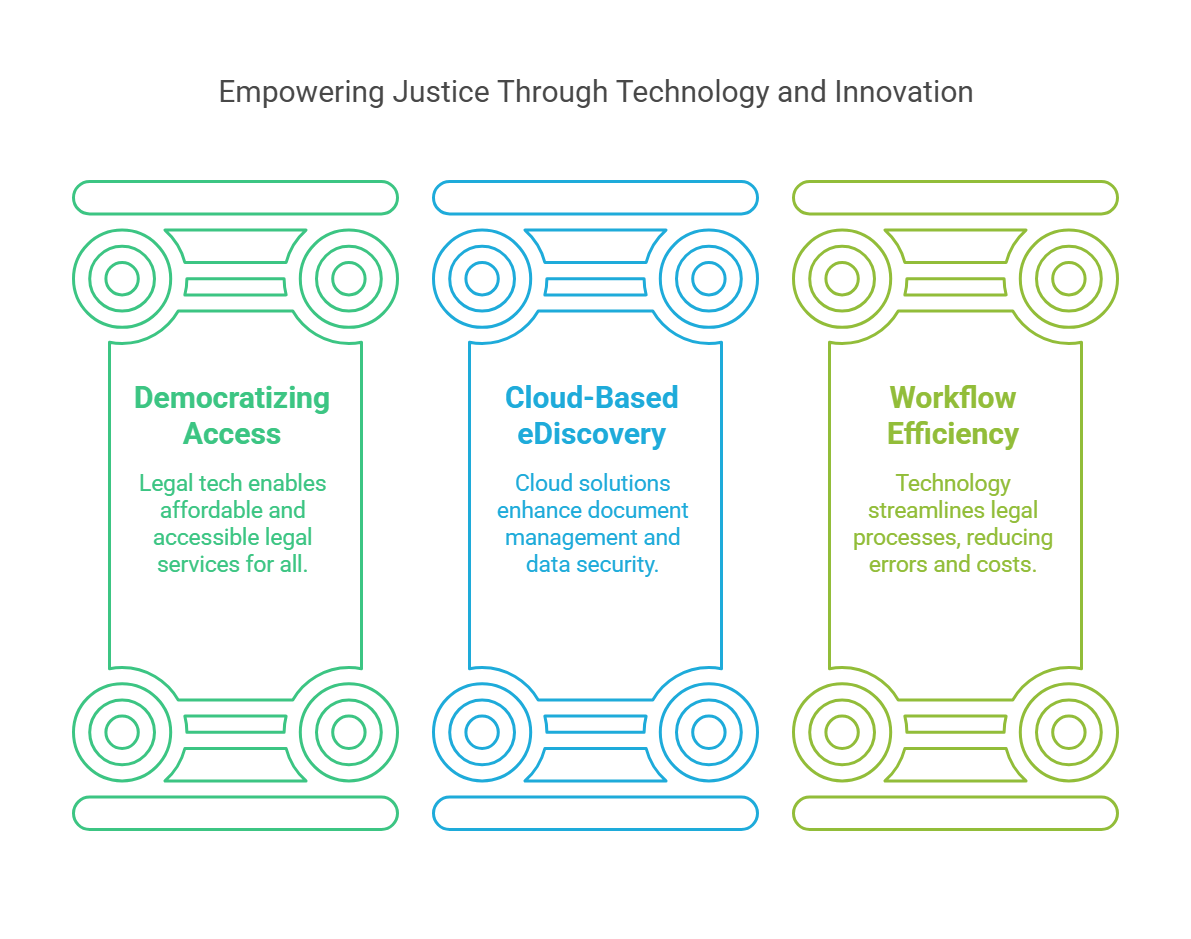
Legal technology is at the forefront of a significant transformation within the legal industry, heralding a new era where access to justice becomes more attainable for individuals and small businesses. Traditionally, legal services were often out of reach for many due to high costs and complicated processes. However, the rise of legal tech is changing that narrative, democratizing access by enabling legal professionals to offer cost effective legal services through innovative pricing arrangements and enhanced efficiency.

A pivotal shift is underway while technology breaks down barriers that previously hindered access to legal services. With platforms that automate legal processes, such as document creation and case management, law firms can operate more efficiently, reducing overhead costs and passing those savings onto clients. This democratization not only allows for enhanced affordability but also enables a diverse array of legal professionals—ranging from solo practitioners to small firms—to compete in a crowded market.

Moreover, legal tech is streamlining workflows, making them not only faster but also more effective and less prone to error. By implementing advanced solutions, attorneys can allocate their time to more strategic tasks, further enhancing the quality of service they provide. The legal landscape is undeniably changing, and the integration of technology, including AI and automation tools, such as those offered by Lead Autopilot, is not just a trend but a driving force in this ongoing evolution.

Cloud-Based eDiscovery: Revolutionizing Document Management​

As the legal industry continues to embrace technology, cloud-based eDiscovery is emerging as a critical game-changer. The adoption of cloud solutions for electronic discovery offers a multitude of benefits, including faster processing times, improved security measures, and heightened efficiency. In an age where vast amounts of electronic data are generated daily, the ability to manage this information effectively is paramount. Document automation tools further enhance document management by enabling law firms to generate and manage legal documents seamlessly, significantly cutting down on drafting time and improving the overall accuracy of legal work.

The right software can transform massive datasets into organized, secure workflows tailored to specific cases. This transition not only alleviates the burden of physical storage but also enhances collaboration among legal teams working remotely or across different locations. eDiscovery involves the intricate process of collecting, storing, protecting, and organizing sensitive files—a task made simpler by leveraging cloud technology.

Firms seeking to optimize their case handling should prioritize tools that provide a dedicated digital workspace, ensuring that all pertinent case materials are easily accessible and secure. This shift not only streamlines operations but also mitigates risks associated with data breaches, an ever-present concern within the legal profession.

The Impact of Artificial Intelligence on Business Processes​

AI Tools for Document Drafting and Review​

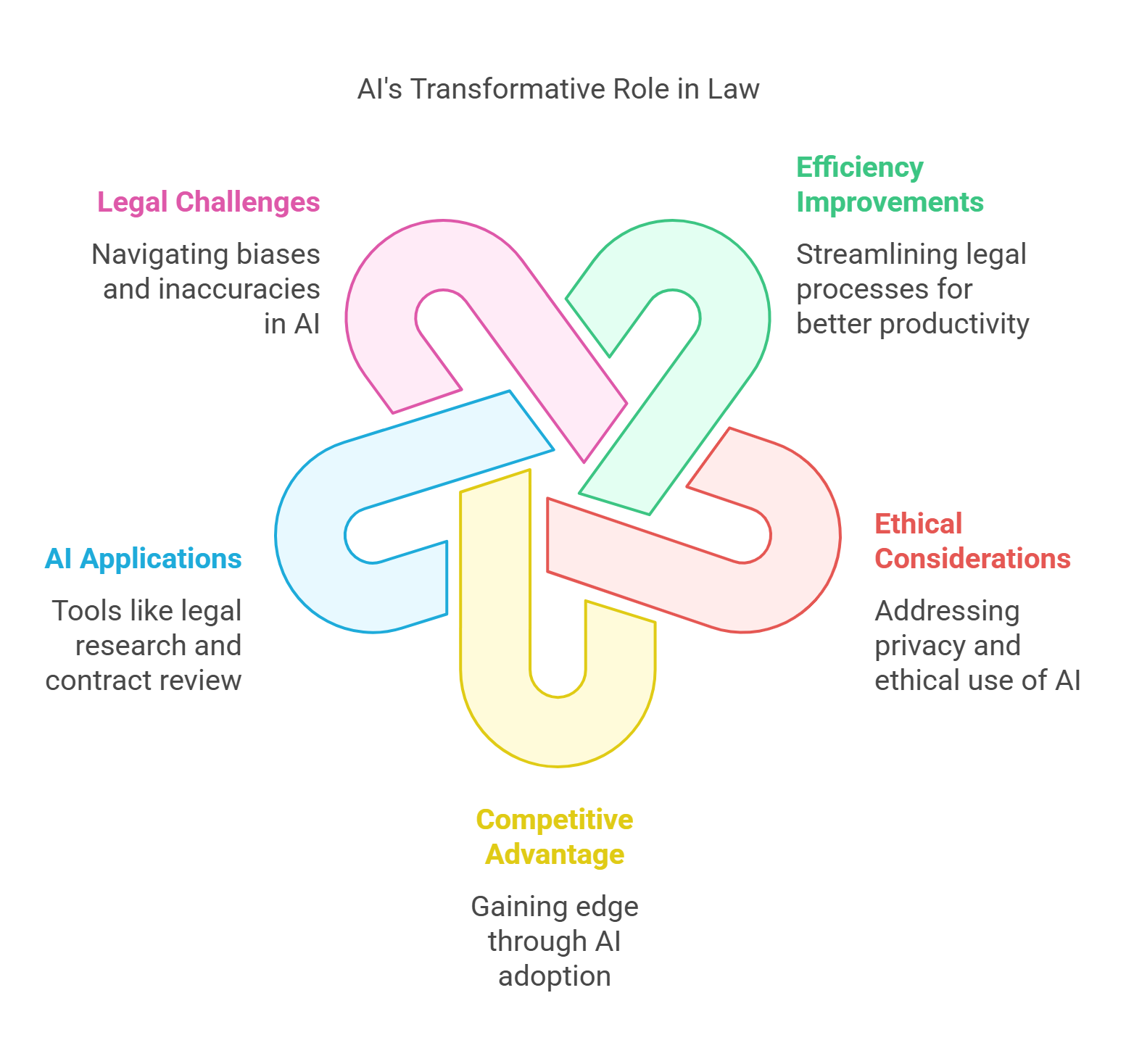
Artificial intelligence (AI) is no longer a distant future concept but rather an essential tool quickly becoming integral in the legal field. The rise of AI-powered technologies is revolutionizing various aspects of legal work, particularly in the drafting, reviewing, and management of legal documents. By employing sophisticated algorithms and data analysis, these tools can assist legal professionals in research, contract analysis, and due diligence, leading to significant efficiency and accuracy improvements.

For instance, AI applications can swiftly analyze large volumes of documents, identifying key clauses or inconsistencies that might otherwise take hours of manual labor. This capability allows lawyers to spend more time on critical thinking, strategic planning, and client interactions rather than getting bogged down by administrative tasks. However, the integration of AI also brings inherent challenges, such as addressing potential biases in algorithms and ensuring compliance with data privacy regulations.

As legal professionals look ahead to 2025, staying informed about these AI trends and tools will be crucial for maximizing the benefits of technology while navigating the associated risks. The landscape for contract management is evolving, and those who leverage these tools will likely find themselves at a distinct advantage.

The Future of Law Firms​

Virtual Law Firms and Remote Work: The New Normal​

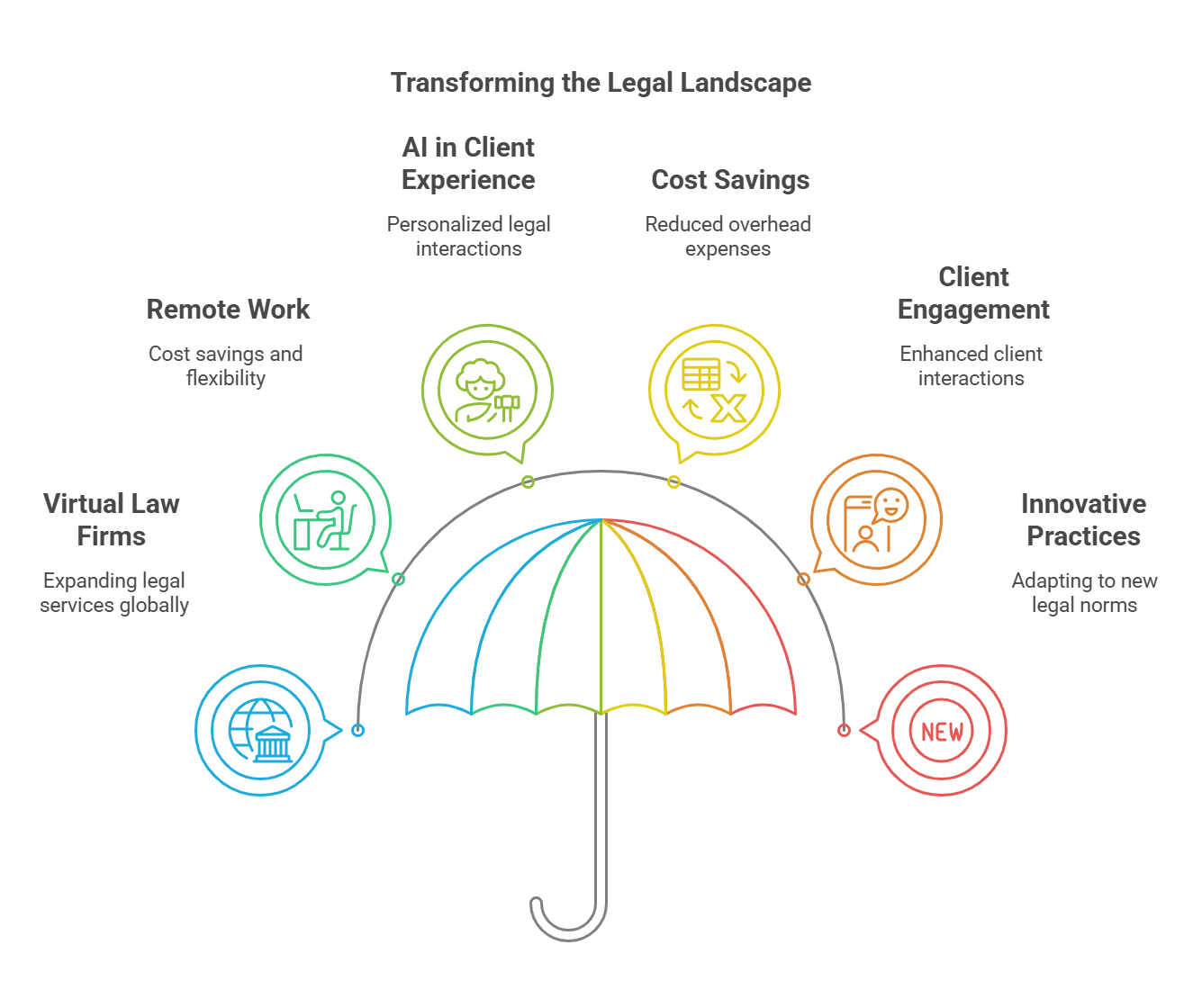
The advent of virtual law firms and the rise of remote work have drastically transformed the legal profession. Technological advancements are facilitating this shift, enabling lawyers to operate effectively from virtually anywhere, thus expanding access to legal services beyond geographical limitations. This model not only attracts a global talent pool but also allows firms to cater to clients from diverse backgrounds and locations. Legal departments are also adapting to these changes, increasingly favoring virtual law firms for their cost-effective and personalized services.

Embracing remote work presents numerous advantages for legal practitioners. There are significant cost savings associated with reduced overhead expenses, as firms can operate without the need for expansive physical office space. Additionally, remote work fosters an environment of flexibility—lawyers can balance their personal and professional lives more effectively, leading to increased job satisfaction and productivity.

As law firms adapt to this new normal, they are empowered to implement innovative practices that enhance client engagement and service delivery. The ability to communicate seamlessly via digital channels, schedule meetings effortlessly, and manage cases on-the-go is propelling the profession into a new era of efficiency and client focus. Embracing tools that enhance these practices, such as Lead Autopilot for automating client interactions, offers firms a competitive edge and ensures they remain relevant in an ever-evolving landscape.

The shift towards virtual law firms and remote work is not merely a reaction to changing circumstances; it is an evolution that positions the legal industry for long-term sustainability and success.

The Evolution of Client Experience​

Generative AI for Personalized Client Experiences​

With the continuing evolution of legal technology, generative AI is rapidly transforming how legal firms engage and collaborate with their clients. This progression towards AI-powered solutions allows law firms to create personalized client experiences tailored to individual needs and preferences. By customizing interactions and automating various routine tasks, legal professionals can focus on high-value work that truly requires their expertise and nuanced understanding.

One of the key drivers behind this evolution is the ability of AI tools, like Lead Autopilot, to streamline interactions by integrating seamless, conversational AI processes that can efficiently handle simpler inquiries and tasks. This ensures that human resources are dedicated to complex issues that necessitate strategic thinking and creativity. As the demand for efficient, cost-effective legal solutions continues to rise, the role of AI in legal services is expected to expand, further enhancing client satisfaction and loyalty.

AI also acts as a significant enabler, allowing law firms to engage with clients in a more flexible and meaningful way, thus strengthening trust and retention. By leveraging the capabilities of platforms like Lead Autopilot, firms can ensure that they remain competitive by adopting innovative solutions that foster a more intuitive and responsive client journey.

The Shift Away from the Billable Hour​

Alternative Billing Methods for Law Firms​

The traditional billable hour model, long synonymous with the legal industry, is gradually giving way to more client-friendly and efficient alternative billing methods. Trends such as flat-fee agreements and subscription-based services are gaining momentum, reflecting a broader shift towards predictability and transparency in legal billing.

Implementing flat rate agreements and product-based services allows firms to widen their client base by attracting those who seek clear and upfront pricing structures. This transformation not only paves the way for enhanced revenue growth but also alleviates the burden of manual, non-billable tasks that previously occupied significant time and resources. By minimizing these tasks, law firms can redirect their focus towards strategic growth initiatives and client-facing activities that boost profitability and satisfaction.

Lead Autopilot, with its powerful automation features, supports this shift by enabling firms to streamline operations efficiently, ensuring that billing processes are both effective and client-centered. Alternative billing models help law firms scale revenue and improve overall client satisfaction by offering transparent, accessible legal services.

Business Development and Client Acquisition​

Online Payments and Cashless Transactions: The Future of Billing​

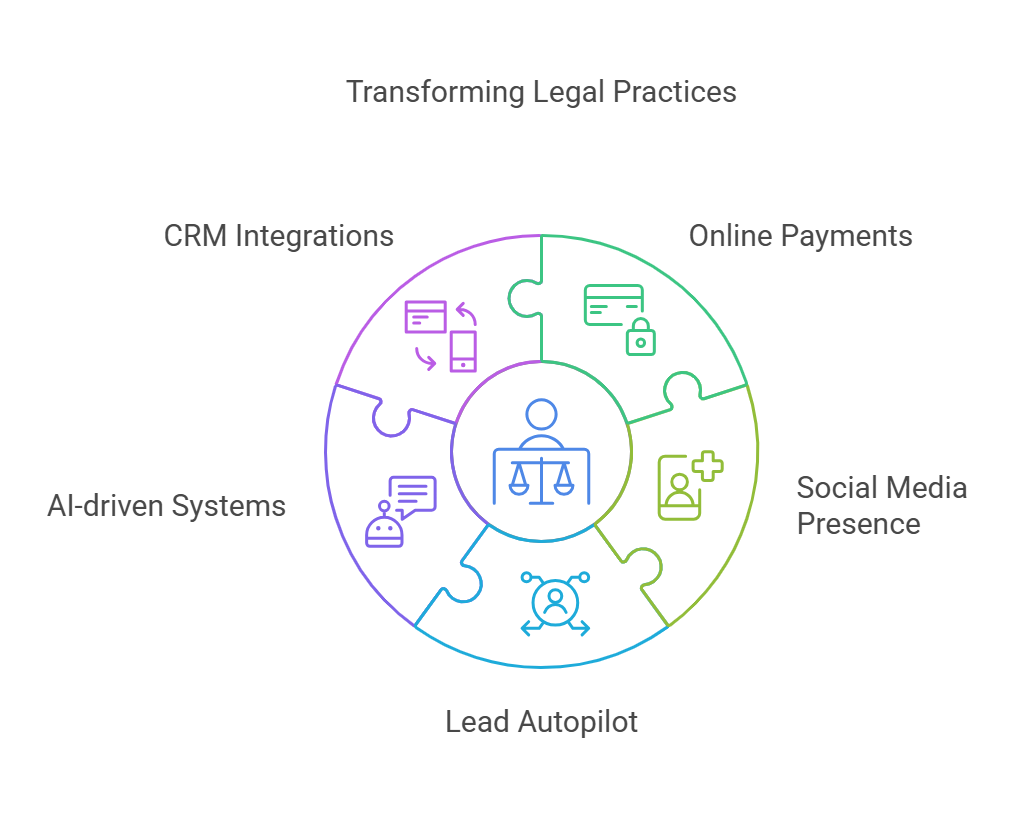
The legal industry's landscape for business development and client acquisition is undergoing a transformation with the increasing adoption of online payments and cashless transactions. As firms expand their online marketing efforts and harness the potential of digital platforms, developing a strong social media presence and offering online legal products or services will be crucial for reaching and attracting the ideal clientele.

As cash payments become increasingly obsolete, online payment platforms offer a convenient and secure alternative, enhancing the client experience. This shift not only supports faster transactions but also increases collection rates, leading to greater financial growth and operational profitability.

Furthermore, the integration of Lead Autopilot into billing and payment processes can optimize these strategies by ensuring seamless operation and access to comprehensive analytics—insights that inform marketing strategies and improve client interaction. Embracing these technologies ensures that legal practices remain agile, adaptive, and competitive in a rapidly digitizing environment.

The Role of Technology in Enhancing Client Experience​

Technology is at the forefront of transforming the client experience within the legal sector. Through the adoption of innovative solutions, law firms can streamline processes and make legal services more accessible and responsive to client needs. Technologies like AI-driven chat systems, automated appointment scheduling, and CRM integrations play crucial roles in creating a cohesive client experience that is efficient and personalized.

Platforms like Lead Autopilot drive client engagement by offering seamless multichannel communication and precise client interactions. With expanded analytic capabilities, firms can better understand client needs, optimize service offerings, and enhance overall satisfaction and loyalty. Such technological advancements provide law firms a competitive edge, ensuring success in a rapidly evolving digital landscape.

Looking Ahead​

The legal profession stands on the brink of a transformative era, driven by remarkable technological advancements poised to reshape every aspect of legal work. As traditional barriers come down, technology is making legal services faster, more efficient, and more accessible to a broader audience. This new era requires lawyers to stay ahead of the curve by embracing these technological shifts to succeed.

Lead Autopilot exemplifies the power of technology in the legal domain, offering an ideal balance of automation, personalization, and strategic insight. For law firms eager to thrive, integrating cutting-edge technology is imperative, ensuring services are competitive, client-centered, and future-proofed.

As the legal industry continues to evolve, embracing innovations like those provided by Lead Autopilot will not just be an advantage but a necessity. Compelled by the advantages technology offers, legal professionals must adapt quickly or risk falling behind. The legal world's future is being redefined, and technology stands at its core, guiding firms toward new opportunities and sustainable growth.

For more information on how Lead Autopilot can transform your legal practice, contact us today.

Explore our solutions today.​

· 12 min read

Introduction to AI in Law​

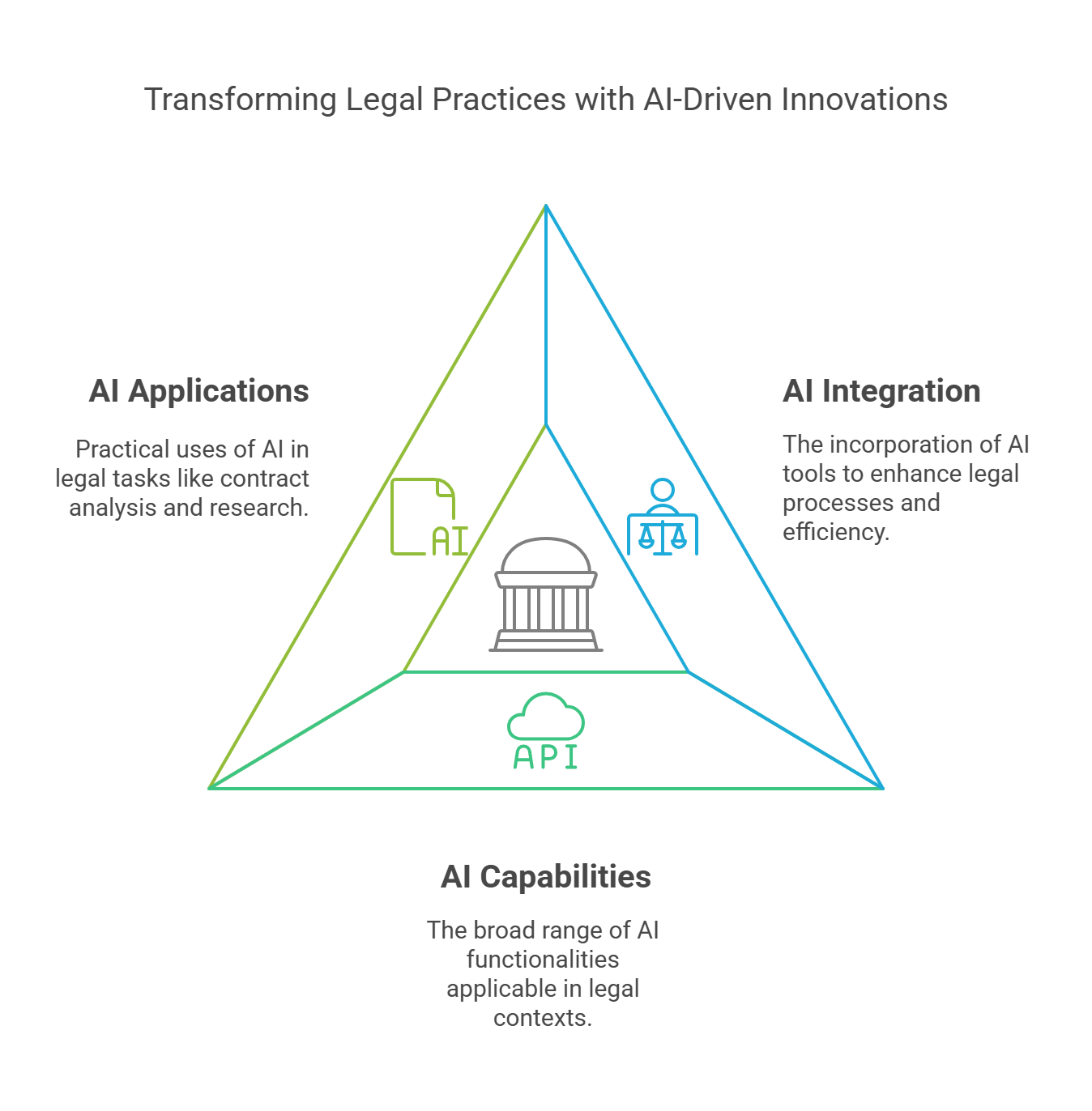
Artificial Intelligence (AI) is increasingly becoming a cornerstone of innovation within the legal industry, facilitating dramatic transformations in how law firms operate. By leveraging AI, firms can streamline processes, increase productivity, and reduce operational costs. The integration of AI-powered tools allows law firms to work more efficiently, pivoting their focus towards a client-centric model that enhances service delivery.

Rather than seeing AI as a replacement for the personalized touch lawyers provide, it's essential to view these tools as partners in augmenting legal practice. The right AI solutions enable legal professionals to work more effectively, freeing them from mundane tasks and enabling them to concentrate on strategic aspects of their work, ultimately fostering higher productivity and reduced expenses.

What is Artificial Intelligence?​

Artificial Inteligence represents a broad category of technologies capable of simulating human-like behavior through the use of software and sophisticated algorithms. This umbrella term encompasses various functionalities that include problem solving, learning, and reasoning, which are essential for data analysis and decision-making in legal environments.

Everyday examples of AI include voice-activated assistants like Siri and Alexa, which understand and respond to user commands, as well as search engines such as Google, which utilize complex algorithms to provide relevant results based on user queries. In the context of law, AI's capabilities can extend to contract analysis, case law research, and predictive analytics, changing how legal professionals approach their work.
How is Machine Learning Different from Artificial Intelligence?​

While AI serves as an all-encompassing term describing various technologies that mimic human processes, machine learning is a specific subset of AI. Machine learning involves the use of algorithms that learn from data, allowing them to automate tasks and enhance their performance over time. In legal contexts, machine learning can be instrumental in automating routine procedures, analyzing vast data sets for insights, and continuously improving systems based on new information.

Understanding the distinction between these terms is critical for law firms aiming to adopt AI technologies effectively. By implementing machine learning solutions, firms can automate numerous tasks, from filtering case precedents to flagging important emails, thereby increasing efficiency across the board.

What is Generative AI?​

Generative AI refers to advanced technologies capable of producing original content, such as text, images, music, or code, in response to specific instructions. By harnessing extensive data sources, these tools can create outputs that often bear little resemblance to the input data, demonstrating a sophisticated level of understanding and creativity.

In the legal sector, generative AI applications can analyze existing case law and generate innovative legal arguments or summarize lengthy contracts. Additionally, AI technology aids legal professionals in enhancing the efficiency and quality of their legal drafting processes. By integrating such capabilities, law firms can augment their analytical processes and foster more robust legal strategies that are backed by comprehensive data insights.

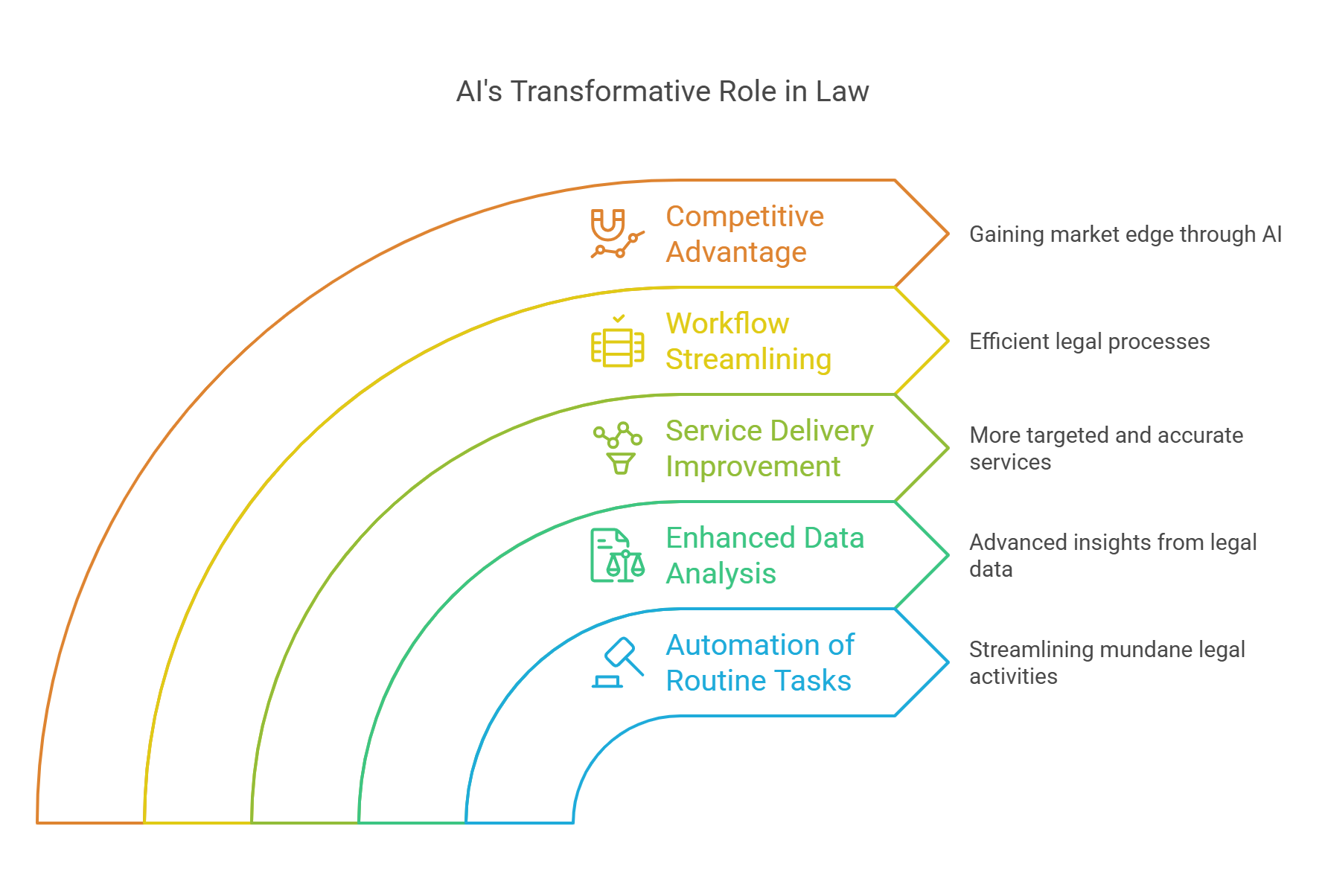
AI is reshaping the legal profession dramatically, enabling firms to automate numerous routine tasks, analyze intricate legal data, and provide more targeted and accurate services. The automation of mundane activities empowers lawyers to focus on areas demanding human judgment and expertise, such as client interactions and strategic decision-making, thereby transforming the overall delivery of legal services.

AI-powered tools play an essential role in driving value for law firms, allowing them to deliver exceptional results while enhancing their operational efficiency. By streamlining workflows, firms can improve their bottom line, leading to greater client satisfaction and increased retention.

AI tools are revolutionizing various dimensions of legal work, encompassing everything from legal research and document review to litigation support. For example, machine learning algorithms can analyze legal documents at an astonishing pace, pinpointing the most relevant information and reducing the time spent on extensive reviews. Law firms utilizing AI can gain a competitive advantage in a rapidly evolving market, positioning themselves to respond quicker and more accurately to client needs.

Advanced AI tools, like Lead Autopilot, further enhance these capabilities by automating lead generation and qualification processes, ensuring that lawyers can allocate their time toward meaningful engagement rather than administrative overhead.

Future Outlook for AI in Law​

The future of AI in law is incredibly promising, with ongoing advancements making AI tools progressively sophisticated and integrated into the daily workflows of law firms. The adoption of AI technologies will empower firms to enhance their service provision, realize cost reductions, and optimize their operational strategies.

Law firms that embrace AI tools will be better equipped to navigate the complexities of the modern legal landscape, positioning themselves not only as leaders in efficiency but also as innovators capable of delivering outstanding client experiences.
AI-powered legal research tools are essential for law firms aiming to enhance their research capabilities and conduct legal research with greater ease. Such tools leverage machine learning and natural language processing to sift through vast databases of legal documents and case law, enabling firms to extract valuable insights and deliver accurate outcomes.

The integration of AI in legal research does not just streamline traditional research methods but fundamentally transforms them, allowing for faster and more comprehensive exploration of legal precedents and relevant statutes.

The primary advantages of employing AI in legal research include significant reductions in the time and cost associated with research activities. AI tools can automatically identify and summarize pertinent case law, allowing lawyers to focus their efforts on strategic tasks. This efficiency not only enhances productivity but also improves the quality of insights generated from legal research.

Nevertheless, it is vital to recognize the challenges associated with AI in this arena, particularly concerning ethical implications such as algorithmic bias and accuracy. Municipalities and legal professionals must remain vigilant to ensure that their AI tools are compliant with established legal standards and free from any unintended biases that could affect outcomes.

Among the AI tools revolutionizing the legal landscape, Lead Autopilot stands out as a personalized AI assistant designed explicitly for legal professionals. Its capabilities enable lawyers to make informed decisions quickly, enhancing productivity while ensuring high-quality outputs. By streamlining the lead generation process and optimizing communication with clients, Lead Autopilot allows legal teams to focus on strategic engagement rather than administrative tasks.

When considering the adoption of AI-powered tools, law firms should prioritize evaluating security and user interface considerations thoroughly. Understanding the security protocols in place, such as data encryption and access controls, is crucial in protecting sensitive client information.

Additionally, a user-friendly interface that allows for easy navigation can significantly impact the effectiveness of an AI tool. Law firms should also take into account the vendor’s reputation and the level of support they offer during the AI integration process.

Top Tool Ways Lawyers are Using AI​

Legal professionals are increasingly harnessing AI to fundamentally transform how they conduct research, draft legal documents, and analyze complex legal data. By automating routine tasks, such as scheduling or data entry, AI-powered tools enable lawyers to dedicate more time to delivering high-quality services to their clients.

This technological evolution not only enhances the efficiency of individual legal practices but also fosters a culture of continuous improvement across the legal profession as a whole.
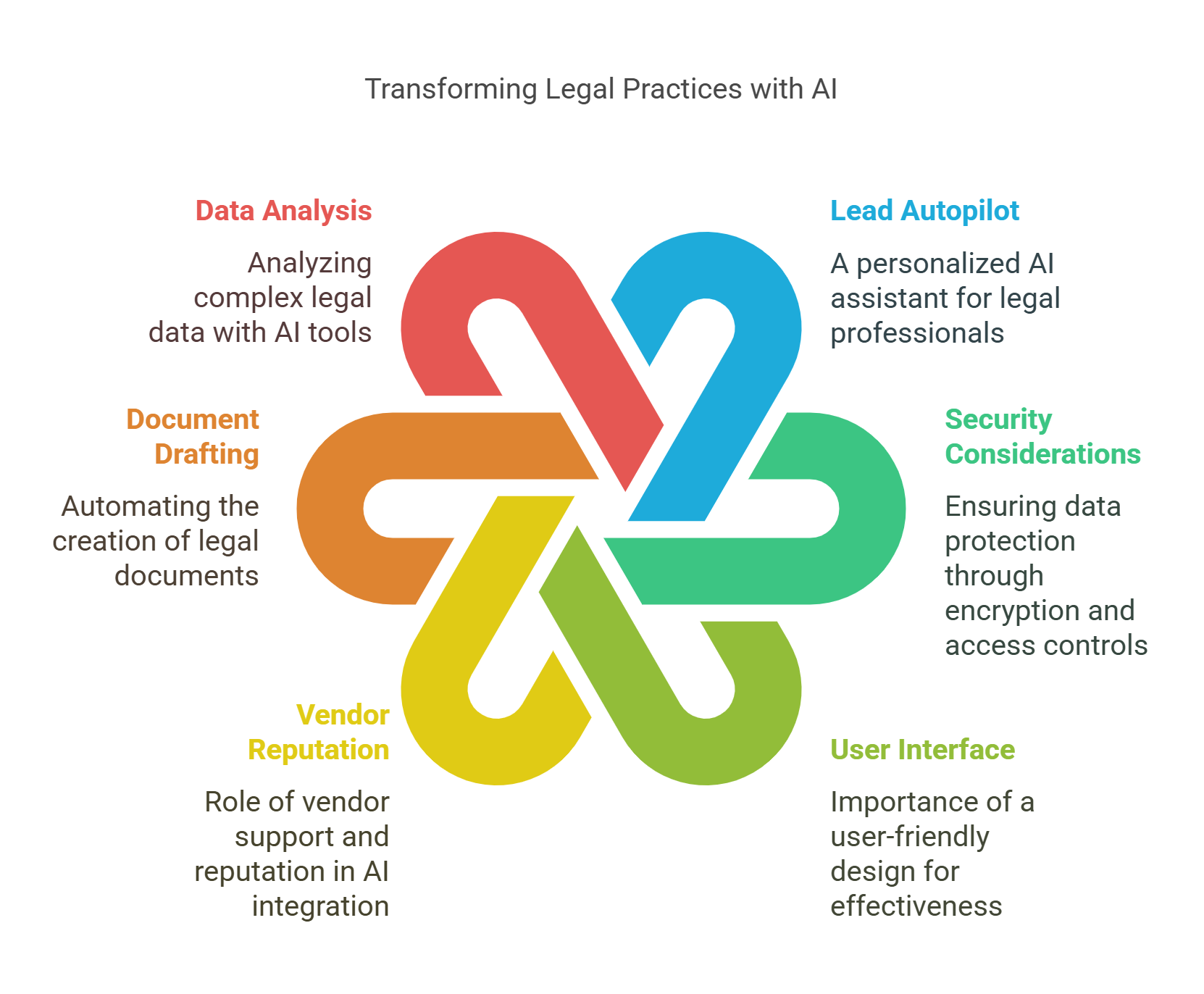
When selecting AI-powered legal software, law firms should pay particular attention to both security and the user interface. Evaluating a vendor’s history in providing reliable support and maintaining robust security standards is essential to safeguard confidential information.

Furthermore, the adaptability of the software can foster a more tailored approach to a firm's unique needs, enabling them to leverage technology to its fullest potential.

Evaluating Security and User Interface​

The assessment of security protocols in AI-powered legal software should involve a detailed examination of measures such as data encryption, access controls, and compliance with relevant industry standards. Firms must also ensure that the user interface is intuitive and customizable, allowing lawyers to navigate the software easily and adapt it to their specific workflows.

By prioritizing these aspects, law firms can select AI solutions that not only enhance efficiency but also protect the valuable information entrusted to them by their clients.

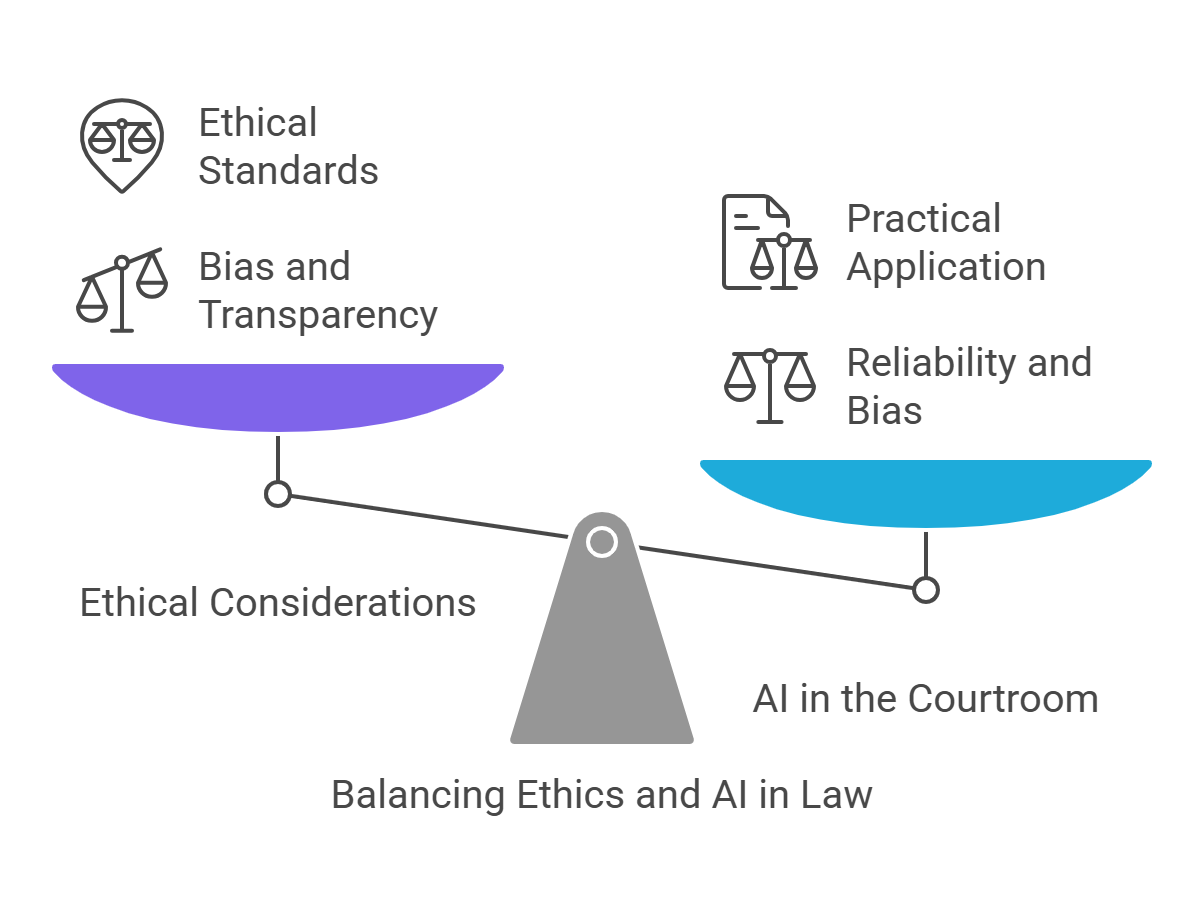
AI in the Courtroom​

As the legal landscape becomes increasingly competitive, AI-powered tools emerge as crucial allies in the courtroom, assisting law firms in mastering the complexities of litigation. These tools are not mere conveniences; they redefine the very strategies lawyers employ in and out of court.

  • AI-powered tools in the courtroom help streamline case preparations, offering insights derived from extensive data analysis. The ability to predict case outcomes has moved from theoretical to practical, bringing AI into the day-to-day operations of law firms with unprecedented impact.

  • Automating routine tasks is another triumph for AI, bestowing law firms with newfound efficiency. AI handles repetitive tasks such as document filing and case tracking, allowing legal professionals to focus more acutely on strategizing and client interactions.

The Role of AI in Litigation​

AI transcends traditional methodologies, employing machine learning algorithms to delve into intricate legal data. This capability unveils patterns and correlations often overlooked by human analysis, empowering firms with novel insights into precedents and case law nuances.

  • The role of AI extends to predicting case outcomes. Through pattern recognition and data extrapolation, AI delivers probabilities and scenarios, enabling legal teams to refine their litigation strategies. Such insights foster more informed decision-making, enhancing legal strategies and client advisement.

AI-Assisted Litigation: Benefits and Risks​

The adoption of AI in litigation offers notable advantages including substantial reductions in time and cost. AI systems can process and analyze data at speeds unattainable by human efforts, expediting case evaluations and resource allocation.

However, alongside the benefits lie potential ethical risks—foremost among them being bias and accuracy. AI systems make determinations based on data input, and if that data reflects existing biases, there's a risk of perpetuating errors and inequities. Vigilance and accountability must be maintained to ensure AI tools are beneficial and equitable.

As with any transformative technology, the deployment of legal AI in legal practice demands careful ethical consideration. Legal professionals must weigh the implications of integrating AI tools, ensuring they align with the profession’s core ethical principles.

AI tools inherently raise questions regarding bias and accuracy. They should be deployed with an awareness of these factors and a plan to mitigate potential negative impacts on legal outcomes.

Industry Guidance on the Ethical Use of Artificial Intelligence​

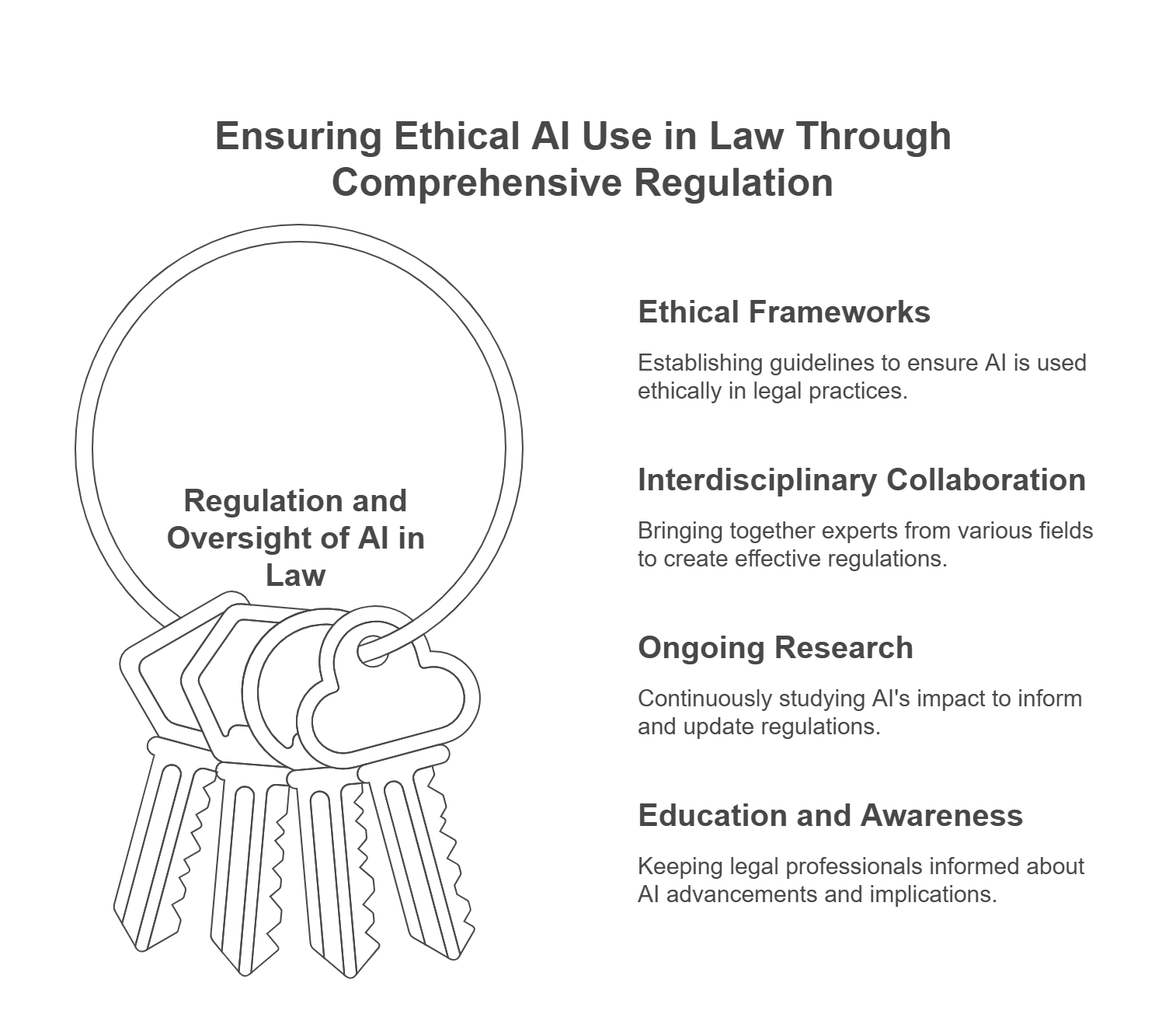
The American Bar Association (ABA) provides invaluable guidance to law firms navigating the ethical complexities associated with AI technologies. This industry guidance serves as a crucial touchstone, helping law firms evaluate AI tools responsibly.

  • Adhering to ABA guidelines ensures that AI is used not only effectively but also ethically—upholding principles of fairness, transparency, and accountability.

Responsible AI with Human Oversight​

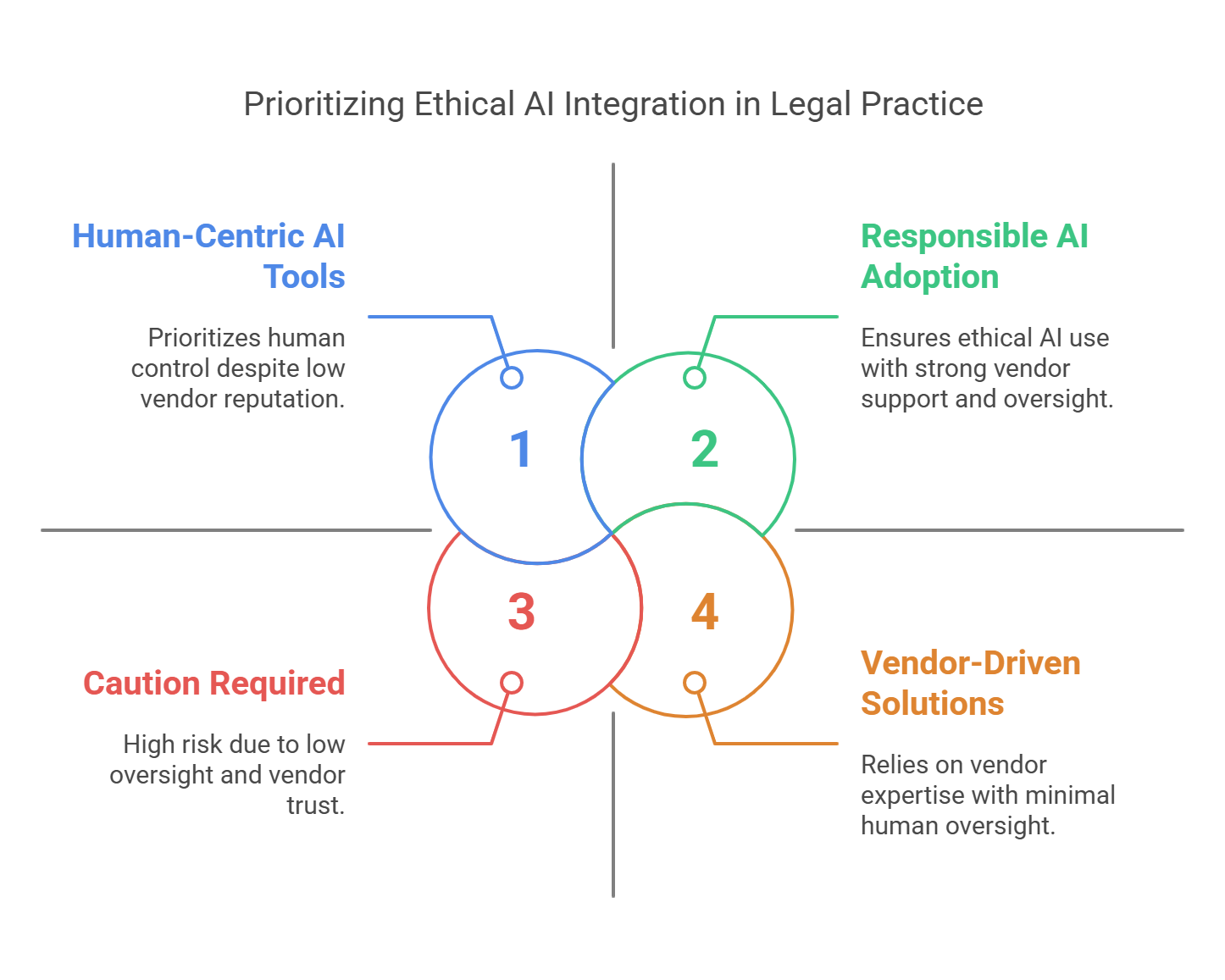
Human oversight remains an essential component of AI deployment within legal settings. Law firms must consider how AI integrates with existing workflows, ensuring that final judgments and decisions remain under human jurisdiction.

  • Vendors' approaches to responsible AI are pivotal. Legal professionals should prioritize solutions designed with human oversight and accountability in mind, ensuring AI tools augment rather than undermine their practice.

Identify the Specific Needs of Your Firm​

A tailored approach is crucial when integrating AI tools into a legal practice. Law firms should conduct thorough evaluations of their workflows, identifying where AI-powered tools could provide tangible benefits.

  • The specific needs of clients should also inform AI tool selection. A nuanced understanding of client requirements allows law firms to deploy AI solutions that align with broader operational and strategic goals.

Consider the Vendor’s Reputation and Support​

The choice of technology vendor can significantly impact the success of AI integration. Law firms must evaluate the reputation, reliability, and support systems provided by potential AI vendors.

  • An emphasis on responsible AI practices and continuous support can ensure that firms not only adopt advanced tools but also sustain their efficacy and ethical standards over time.
Staying Ahead of the Curve in AI Adoption​

The landscape of AI-powered tools evolves rapidly, presenting both opportunities and challenges for law firms. Staying informed about the latest developments can help firms maintain a competitive edge.

  • Regularly reviewing AI advances and vendor approaches to responsible AI will enable legal professionals to leverage cutting-edge technology effectively.

As AI technologies mature, they continue to align more closely with the complex demands of legal practice. Innovations like Lead Autopilot exemplify how AI can seamlessly integrate into the legal workflow, automating crucial processes while ensuring human oversight.

  • Lead Autopilot’s unique capabilities, such as enhanced analytics and customized AI interactions, can significantly bolster a law firm’s strategic objectives. By adopting AI tools that encapsulate responsible AI practices, legal professionals can embrace advancements that optimize operations, align with ethical standards, and enhance client service.

Law firms interested in exploring how Lead Autopilot can enhance their practice should contact us to learn more about integrating cutting-edge AI solutions into their operations.


Explore our solutions today.​

· 9 min read

Artificial intelligence (AI) is at the forefront of a transformative wave within the legal profession, providing law firms and practitioners with the tools they need to automate manual processes and operate more efficiently. With platforms like Lead Autopilot AI, legal professionals can streamline tasks such as client outreach and case management, ultimately leading to improved service delivery. Machine learning algorithms play a crucial role in these platforms, enabling more accurate predictions and efficient task automation.

AI-powered tools not only simplify routine tasks but also enhance the quality of legal work by minimizing human error and expediting research processes. However, as AI continues to evolve, it raises significant ethical questions and potential risks, particularly concerning privacy and the ethical use of AI-generated insights. Legal professionals must navigate these complexities while integrating AI technologies into their practices, ensuring they uphold the values of the legal profession even as they leverage cutting-edge tools.

Moreover, the advent of AI is reshaping the manner in which legal services are offered. The focus is shifting towards leveraging AI’s capabilities for increased accuracy, efficiency, and reliability in legal processes. As firms adapt to this new reality, those that embrace AI-driven solutions are likely to gain a competitive edge, paving the way for a more modern approach to law. Additionally, basic legal information is becoming increasingly accessible through AI, which is crucial for obtaining comprehensive legal services, though concerns about equitable distribution remain.

Understanding AI in Law​

Artificial intelligence encompasses a wide range of technologies that utilize computer systems and software to simulate intelligent human behavior. In the context of the legal field, AI manifests through various innovative applications, including AI-powered legal research tools, contract review solutions, and legal brief analysis software. AI also plays a significant role in drafting legal briefs efficiently and accurately, though it comes with risks such as potential inaccuracies or fictitious legal citations. Predictive analytics, powered by AI, can forecast case outcomes and inform legal strategies, providing a competitive edge to legal professionals. These tools harness the power of AI to sift through vast amounts of data, offering insights that would take human professionals significantly longer to achieve.

One notable implementation of AI in law involves the use of large language models (LLMs). These advanced AI models generate human-like text and can be utilized to provide predictive insights into legal matters. While LLMs can enhance efficiency and accuracy in legal analysis, the legal profession must also remain vigilant about the implications of bias and the potential for inaccuracies that may arise from AI-generated suggestions.

As legal professionals increasingly incorporate legal AI into their workflows, understanding the capabilities and limitations of these technologies becomes crucial. Continual education and training are essential in helping legal teams maximize AI benefits while mitigating any unintended consequences.

The Future of Law Firms in the Age of AI​

The integration of AI tools, such as Lead Autopilot AI, into the law practice signifies a significant evolution in the legal landscape. To remain competitive, firms are increasingly turning to these AI-powered solutions, which enable them to provide more effective and efficient services to their clients. By adopting automation, firms can streamline the preparation of legal documents, enhance legal research capabilities, and ensure timely client communication. A law firm must navigate ethical implications while leveraging AI, distinguishing between consumer AI and specialized legal AI tools designed for firm use.

As AI reshapes the operational framework of law firms, a sharper focus on automation is driving innovation in service delivery. For instance, with AI handling more routine tasks, attorneys can allocate more time towards strategic planning and high-value legal work. This paradigm shift not only boosts productivity within firms but ultimately leads to a higher standard of legal service for clients.

Additionally, law firms are leveraging AI to refine their approaches to case analysis and management, ensuring better outcomes through data-driven insights. By harnessing advanced analytics capabilities, firms can assess case trends and develop more effective legal strategies, thereby improving their overall success rates.

Ethical Considerations and Risks​

The rapid adoption of AI in the legal industry brings with it an array of ethical considerations that practitioners must confront. Concerns surrounding bias, accuracy, and transparency are paramount in AI implementation. Algorithmic transparency is essential to ensure that AI systems are understandable and accountable, reducing the risk of biased or unfair outcomes. Legal professionals need to be conscious of the potential implications of AI decision-making, particularly when it pertains to sensitive client matters.

For instance, AI models can inadvertently perpetuate bias if they are trained on skewed datasets. This bias can manifest in various forms, including discriminatory outcomes in legal advice or differential treatment based on irrelevant characteristics. Consequently, it is imperative for legal professionals to critically evaluate the tools they utilize and ensure that their AI systems adhere to ethical standards.

Furthermore, the legal industry is actively developing guidelines and regulations aimed at addressing the ethical implications of AI. These standards serve as a means of safeguarding clients’ rights while promoting accountability among legal practitioners. Legal professionals have a responsibility to ensure that their use of AI contributes positively to the profession and aligns with established ethical principles.

AI in the Courtroom​

Artificial Intelligence (AI) is making significant inroads into the courtroom setting, shifting the paradigm for legal evaluations and decision-making. AI’s ability to process vast amounts of data quickly can aid in predicting case outcomes or the effectiveness of legal strategies. Legal analytics, powered by AI, provide valuable insights by analyzing past case data and identifying patterns that can influence current legal decisions. These insights are garnered from existing legal precedents, enhancing the lawyer’s ability to strategize effectively. AI technologies can also be applied in criminal law for predictive analytics and the drafting of legal briefs.

Nevertheless, the utilization of AI in legal proceedings prompts critical discussions around its reliability and potential bias. Legal professionals must navigate these treacherous waters carefully, ensuring that AI-generated evidence or suggestions do not inadvertently skew justice. As AI continues to evolve, it is imperative that those in the legal field remain informed and critically engaged with these technologies, ensuring they serve justice rather than detract from it.

AI tools like Lead Autopilot are examples of merging technology with legal processes to streamline operations. These tools aid not only in behind-the-scenes preparation for court cases but also shape the nature of courtroom interactions through thorough, data-backed insight generation.

Generative AI’s Potential in Law​

Generative AI stands at the frontier of innovation within the legal sector, offering transformative possibilities across various applications such as legal research, contract review, and document analysis. Natural language processing (NLP) is a key component of generative AI, enabling the analysis and generation of human-like text for legal documents and communications. This technology enables legal practitioners to automate routine tasks, thus freeing up valuable time that can be redirected towards more strategic endeavors.

The potential of generative AI to enhance productivity is substantial; by automating standard procedures, lawyers can devote their energy to complex cases that require nuanced human judgment. Nevertheless, the implementation of generative AI must be approached with care, as it too poses risks related to bias and accuracy.

As generative AI applications proliferate in the legal domain, careful consideration must be given to ethical implications. Organizations need to establish clear guidelines for the deployment of these technologies, ensuring that they both comply with legal standards and uphold the integrity of the profession.

With platforms such as Lead Autopilot, legal professionals can implement generative AI thoughtfully, capitalizing on its capabilities while diligently mitigating its risks. These tools help bridge the gap between innovative potential and practical application in everyday legal tasks.

Regulation and Oversight​

Amidst the enthusiastic adoption of AI technologies, the legal industry is actively working to establish comprehensive guidelines and regulations designed to address the ethical implications of AI. Regulatory bodies and legal associations are grappling with the complexities of ensuring transparency, accountability, and fairness in AI applications within the legal field. The development of ethical AI frameworks is crucial to guide the responsible use of AI technologies in law.

Governments and policymakers are recognizing the pressing need to oversee AI technologies to prevent misuse and promote ethical practices. The regulation of AI in law is an ongoing process that requires interdisciplinary collaboration among lawmakers, legal practitioners, technologists, and ethicists.

The aim is not only to foster a conducive environment for AI innovation but also to create safeguards that protect legal professionals and their clients from potential risks associated with AI deployment.

Ongoing research is pivotal, providing a foundation for these regulatory endeavors. Insights from interdisciplinary collaborations—spanning technology, law, and ethics—are essential for crafting comprehensive regulations that accommodate technological advances while preserving the justice system’s fairness and transparency.

The Importance of Ongoing Research and Study​

Understanding the implications of AI in legal practice necessitates ongoing research and study. It is vital that legal professionals stay informed about the latest developments and advancements in AI technologies and their applications within the legal context. The transformative effects of AI on the legal world highlight how it can enhance efficiency and potentially change legal practices through improved technology.

Regular engagement with emerging technologies equips lawyers with the knowledge to leverage AI responsibly and effectively. Given that AI’s impact on the legal profession is multi-faceted, collaboration among legal experts, technologists, and ethicists will foster comprehensive strategies that maximize AI benefits while addressing associated challenges. By prioritizing education and interdisciplinary dialogue, legal practitioners can ensure that their practices align with the evolving landscape shaped by AI.

Conclusion​

AI is undeniably reshaping the landscape of the legal profession, ushering in a new era defined by heightened efficiency, precision, and innovation. Nevertheless, the integration of AI entails navigating intricate ethical considerations, necessitating deliberate regulation and cautious application.

Law firms that harness AI solutions like Lead Autopilot are well-positioned to lead in this transformative phase. These platforms enhance operational capabilities by automating routine tasks and providing valuable insights that bolster legal strategies.

Despite the uncertain terrain ahead, the presence of AI in legal practice is steadfast. Legal professionals must be prepared to embrace change and evolve alongside technological advances to maintain their competitive edge. Adapting to these developments assures that law firms not only survive but thrive in this new digital epoch.

For further guidance on integrating AI into your legal practice, please [contact us](). We are here to support your journey into the future of law.

Explore our solutions today.​

· 3 min read

Challenges Faced by Injury Law Firms: Qualifying and Converting Leads Quickly​

Injury law firms operate in a competitive landscape where potential clients seek swift legal support after accidents or other personal injuries. The challenge, however, lies in qualifying leads efficiently and ensuring they meet the criteria for representation. With traditional methods, the process is often cumbersome and time-consuming, resulting in missed opportunities when prospects turn to other firms due to delayed responses.

The primary issues encountered include:

  1. Time Sensitivity: Potential clients often reach out to multiple firms simultaneously, so speed is crucial. Delays in the response can lead to losing the client to a competitor offering quicker turnaround.

  2. Lead Qualification: Law firms need to quickly assess whether a lawyer can take on a prospective client's case. This involves evaluating the case's merits and ensuring it aligns with the firm's specialization, which can vary from motor vehicle injuries to more complex class action lawsuits.

  3. Resource Intensive: Screening and qualifying leads traditionally requires a significant commitment of time and manpower, which can drain valuable resources away from other critical aspects of legal practice.

  4. High Volume of Inquiries: Injury law firms often receive a high volume of inquiries, many of which may not be viable. Sorting through these can be overwhelming without the proper systems in place.

The Solution: AI-Powered Lead Qualification with Lead Autopilot​

Modern AI technologies have transformed how injury law firms manage lead intake, allowing them to enhance speed and efficiency in client acquisition. Lead Autopilot provides an innovative solution by automating the lead qualification process, ensuring firms never miss out on potential clients due to slow response times.

Here's how Lead Autopilot is making a difference:

Speed to Lead:

  • Instant Engagement: The AI-empowered platform immediately reaches out to new leads, regardless of the hour. This prompts an instant response mechanism essential in the injury law sector, where prospective clients expect prompt attention.

  • 24/7 Availability: Unlike human staff, the AI operates around the clock, ensuring no lead falls through the cracks, especially during off-hours.

Tailored Qualification:

  • Case-Specific Assessment: Lead Autopilot's AI is tailored to the specific needs of the law firm, whether handling general personal injuries or more nuanced cases like mass tort lawsuits. This customization ensures only eligible leads proceed further in the pipeline.

  • Automated Screening: The technology swiftly distinguishes between high-potential leads and those less likely to convert, based on preset criteria matched with the firm's specialties.

Resource Optimization:

  • Reduced Manual Workload: By shouldering the initial screening process, the AI frees up legal teams to focus on high-value tasks, such as providing actual legal counsel or strategic case planning.

  • Increased Opportunity Capture: With AI ensuring rapid and effective initial engagement, law firms witness a notable increase in opportunities and conversions that might have otherwise been missed.

Utilizing AI-powered solutions like those from Lead Autopilot, injury law firms can maintain a competitive edge in capturing and converting leads swiftly and efficiently. This streamlined approach not only augments revenue through increased client acquisition but also enhances client satisfaction through rapid, personalized service.

Call to Action: Want to learn more about how Lead Autopilot can transform your lead management process? Explore our solutions today.